
How Available is Your Energy?
One of the topics that comes up most in our cool down chats is nutrition. Sometimes it's as simple as “what's for breakfast?,” or what you ate to fuel today's workout. Other times, it's fasted versus unfasted training, or how to think about carbs, protein, and fats. I love these conversations because they let me give general guidance while getting to know each person well enough to understand what actually works for their body and their goals.
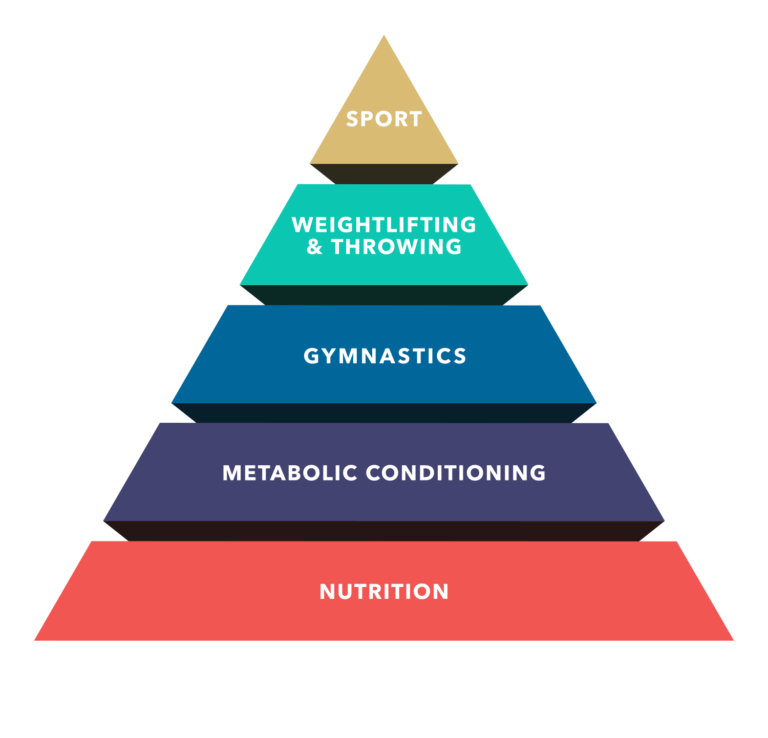
The CrossFit Pyramid
Low energy availability came up in one of these talks recently, and it's a concept most people have never heard of, even though it's one every coach and athlete should understand.
Here's the short version of what it means. Your body needs fuel for two jobs at once: powering your training, and running everything else that keeps you healthy, including hormone production, immune function, tissue repair, and bone density. Energy availability is what's left to cover that second job once training demands are met. When intake consistently falls short of what both jobs require, your body starts making trade-offs. It deprioritizes the systems that don't feel urgent in the moment, even though they're the ones responsible for your long-term health and progress. That's low energy availability, and it can affect everyone regardless of age or gender.

RED-S, the body’s low-battery mode
Left unaddressed, it can progress into RED-S, or Relative Energy Deficiency in Sport, a formally diagnosed condition. In women, it often announces itself clearly through missed or irregular periods. In men, it's quieter and easier to miss: stalled strength gains, decreased libido, or injuries that linger longer than they should. That difference is exactly why it tends to fly under the radar for guys in particular.
At its core, this comes down to a balance between the fuel you take in and the energy your body actually needs to produce ATP. Stress, sleep, food, and training all draw from that same bucket. If you notice you're consistently low on energy, or your recovery and performance have plateaued despite consistent effort, it's worth taking an honest look at your food intake relative to your Resting Metabolic Rate (RMR). A DEXA scan can measure this directly, but general calculations work well too, and a wearable can help you spot trends in energy expenditure even if the numbers aren't exact.
If any of this sounds familiar, don't ignore it or try to sort it out on your own. Talk to your CrossFit coach! We'd rather help you catch this early than watch you push through it. Don’t have a CrossFit coach? We know where to find some great ones. Whether it's a quick question after class or a deeper conversation about your training and nutrition, we're here for it.